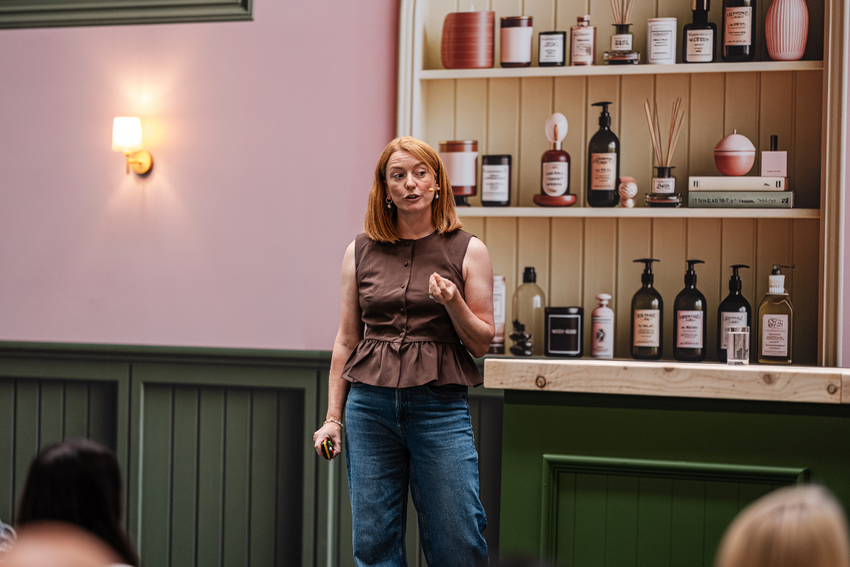
Social media is where more and more shoppers start looking for gifts, homeware, and new brands. At Autumn Fair 2026, Alison Battisby, founder of social media consultancy Avocado Social, took to the Counter Talks Stage to walk through the three key tactics she sees working for retailers right now: social ads, consistent content and live shopping.
Alison has worked in social media for 15 years, working on Tesco's Facebook page in 2009 all the way through to recently running a TikTok Shop workshop for Breville, the company behind Sage coffee machines.

How many people in the UK use social media?
Despite talks of digital detoxes and bans for under-16s, usage continues to climb. Almost half of UK adult internet users now use social platforms to find product information, and Alison noted that around 41% of Gen Z treat social media as their first stop for search, particularly around Christmas and Valentine's Day.
Social commerce in the UK is projected to reach almost £16 billion by 2028, according to a Retail Economics report produced in partnership with TikTok. It also explains why Gen Z travel to independent shops they first found online.

How have social media ads changed for retailers?
The biggest shift Alison has seen in 11 years of running Meta ads is in targeting. Retailers used to pick audiences by interest, but Meta has gradually stripped those options back, partly because of EU privacy laws. Now you can only really choose a location and a rough age range, and Meta's AI system, Advantage+(which is set to become mandatory) does the rest.
Retailers still control the creative, and the best-performing ads are now posts that look authentic rather than polished. Alison shared figures suggesting user-generated content drives 6.7 times higher conversions than brand-made content. Partnership ads, where a brand runs an ad alongside a creator talking honestly to camera about a product, are now widely used by brands like HelloFresh and TRIP.
How many ad creatives should retailers upload?
Probably more than you're used to, as Meta now pushes what it calls creative diversification. Instead of relying on one image or video, Alison recommends uploading at least five creatives per campaign, and her agency aims for ten or more.
Wellness drinks brand TRIP runs near-identical ads with different hooks, one calling for "300 men who are cutting back on the beers" and another for busy parents, and lets the AI find the audience. You can see any brand's live ads for free in the Meta Ad Library, which Alison uses for competitor research.
What should retailers post on social media?
Alison puts consistency ahead of volume, and Avocado Social posts three times a week and has stuck to that for two years. She still follows the 80/20 rule, with most posts there to inspire or tell a story and only a fifth focused on selling.
Content that works well includes product demos, exclusives, behind-the-scenes and day-in-the-life clips, creator content and brand collaborations. Dash Water's rosé spritz bundle with a supermarket wine brand, and MOTH's Valentine's tie-in with Franco Manca, both let each brand reach the other's followers. It helps to get your brand story right first.
Which Instagram formats work best for each stage of the funnel?
Reels are best for reaching people who don't already follow you, carousels suit people who are considering you and want to know more, and ads do the heavy lifting on conversion. Single image posts are the weakest organically but still work as ads.
She also suggested auditing your route to purchase by asking a friend to try buying from your Instagram. Linking straight to products from your bio, not your homepage, and tagging your Shopify catalogue in posts both smooth the journey.
Is live shopping worth it for retailers?
Alison thinks so, and the question has shifted from whether to be on TikTok Shop to how to do it well. John Lewis has just announced its investing in the platform, and Ninja is a best-in-class example. Its approach is to pick a product it has plenty of stock in, send it to creators, run ads with their content, then go live with a demo and a discount.

You don't need to go live daily, and Alison suggested starting with one live a month. Luxury brands often add value through bundles instead of discounting. You'll need around 12 organic videos on your account before TikTok approves your shop, and our TikTok Shop guide covers the basics for independents. Live selling platform Whatnot also ran a show floor takeover for retailers keen to try it.
How much should a small business spend on social ads?

Alison recommends a minimum of £250 for a two-week test campaign, run once a month and ideally timed around key moments like Black Friday to Christmas. She was blunt that Meta's suggested £3 a day won't do anything for you. Most of her clients spend £500 to £2,000 a month once they see a return.
Online sales can be tracked through ad tags, Shopify or Google Analytics. In-store sales are harder, so she suggests asking customers how they heard about you, using store-only codes and comparing local sales during campaign periods.
If you like what you've seen here, why not join us in person for the retail event of the season? Spring Fair runs from 7-10 February 2027 at the NEC, Birmingham. Register for free here, and join our newsletter for the latest updates before the show.
Featured Articles
- 1 5 Stunning Homeware Suppliers you Need to Know About
- 2 Celebrating Inspiring Women in Retail: Spring and Autumn Fair's Commitment to Championing Women in Retail
- 3 UK Retail Insights 2025: Consumer Caution and Selective Spending
- 4 Theo Paphitis: Small Businesses, Big Impact
- 5 A Fireside chat with Olivia Bowen and Keplin CEO Ray Mehra